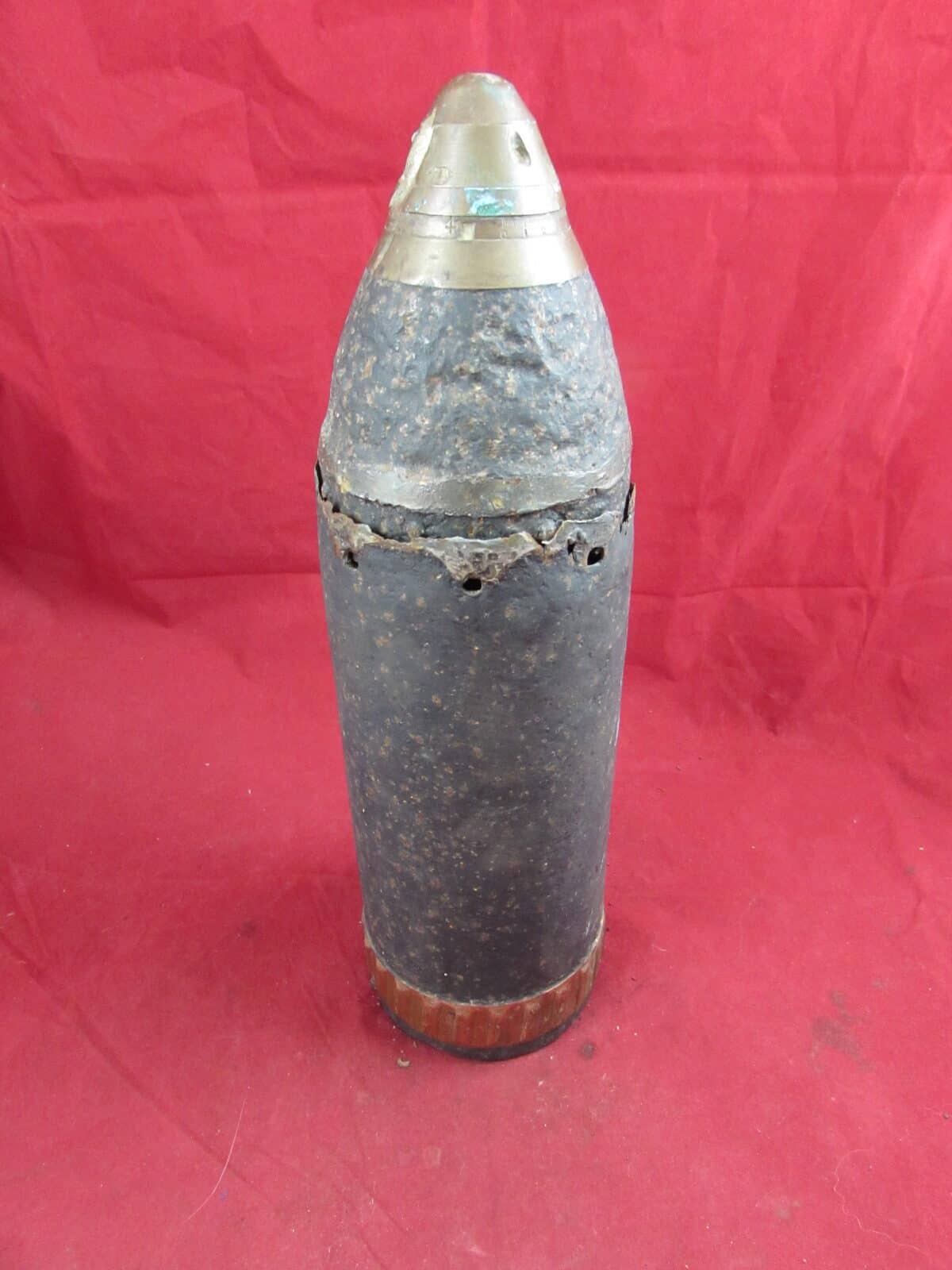
Inert WW1 British Battye Grenade – Original First World War Trench Warfare Relic
$33
$41.91
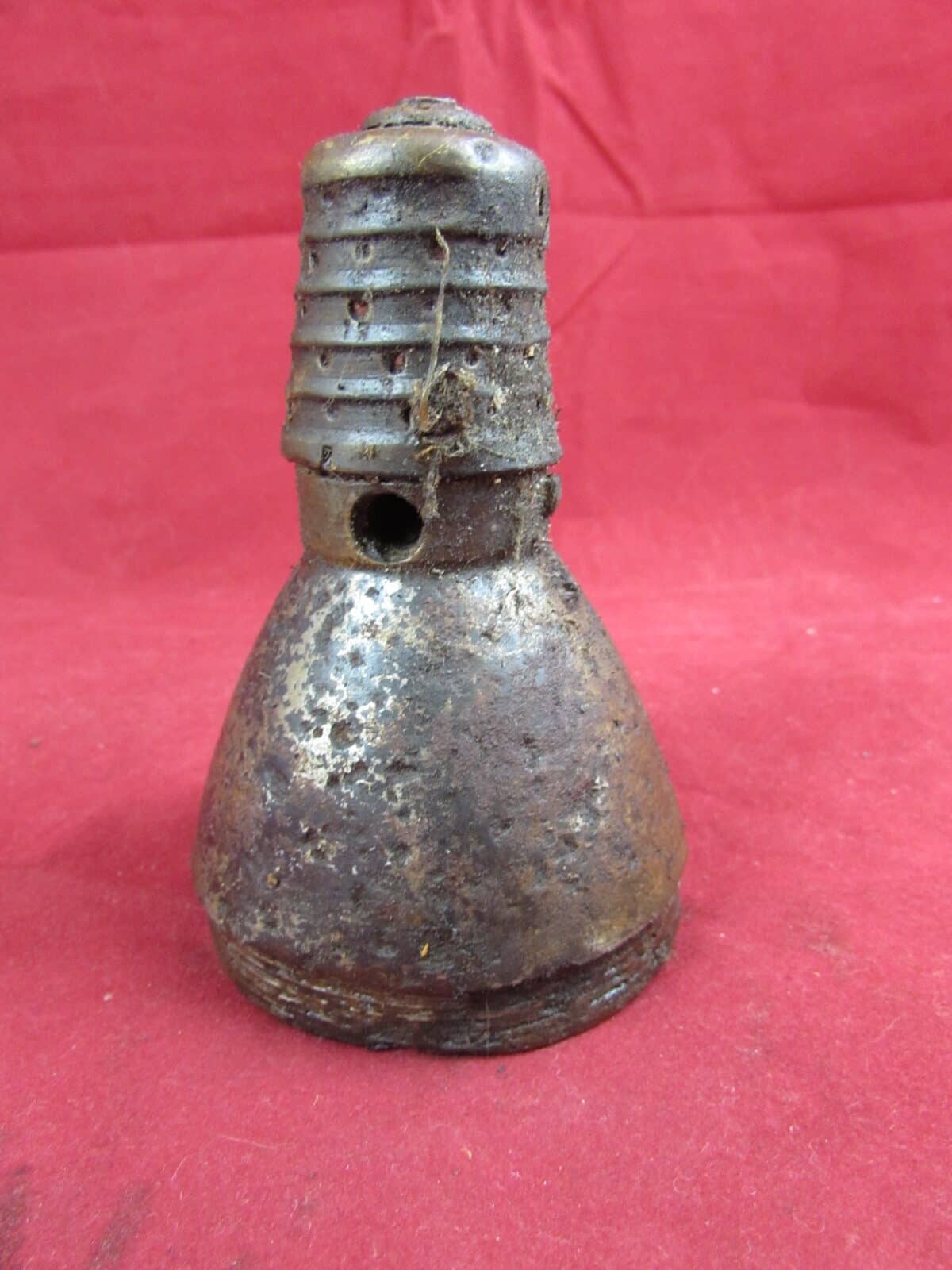
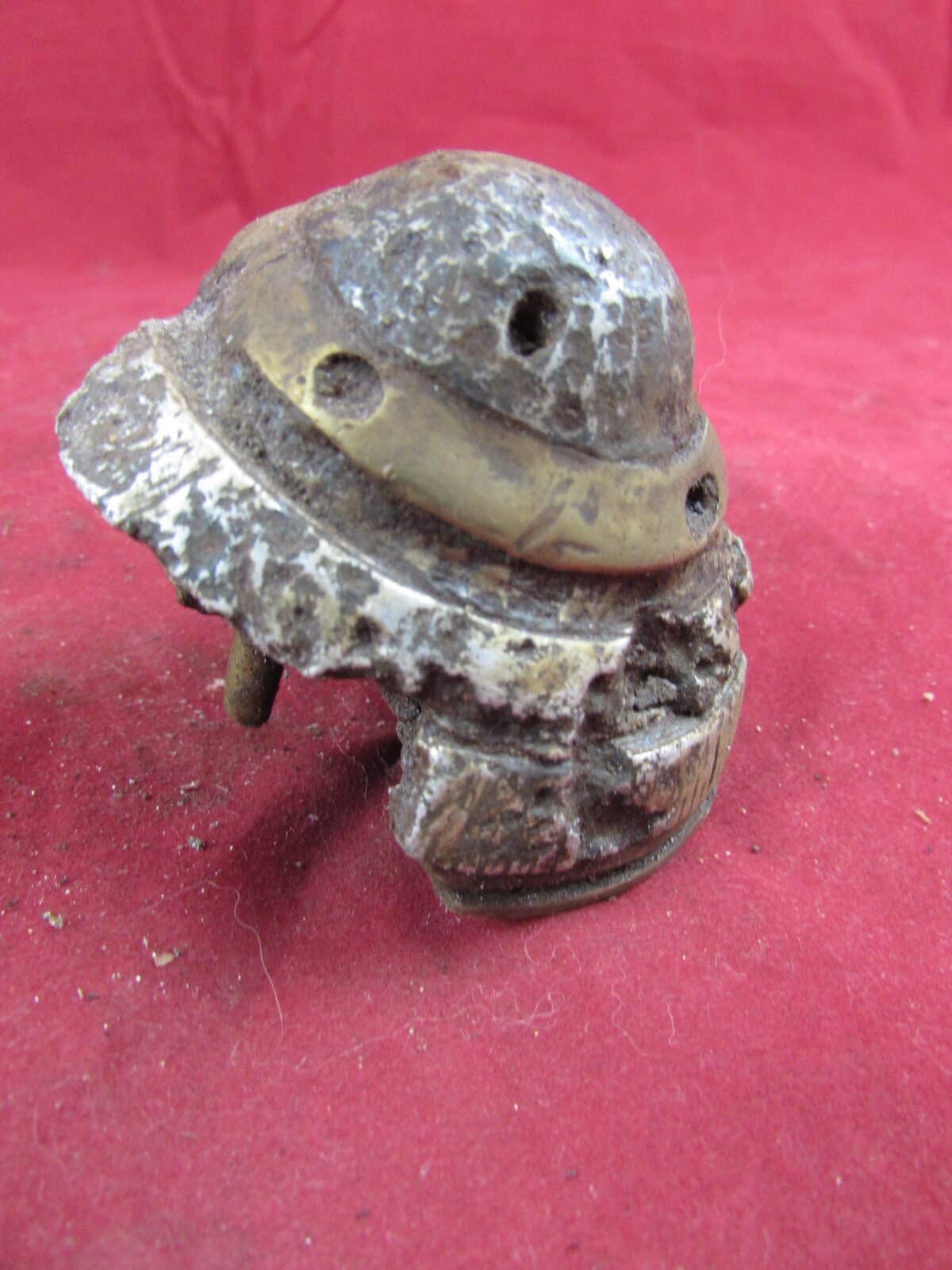
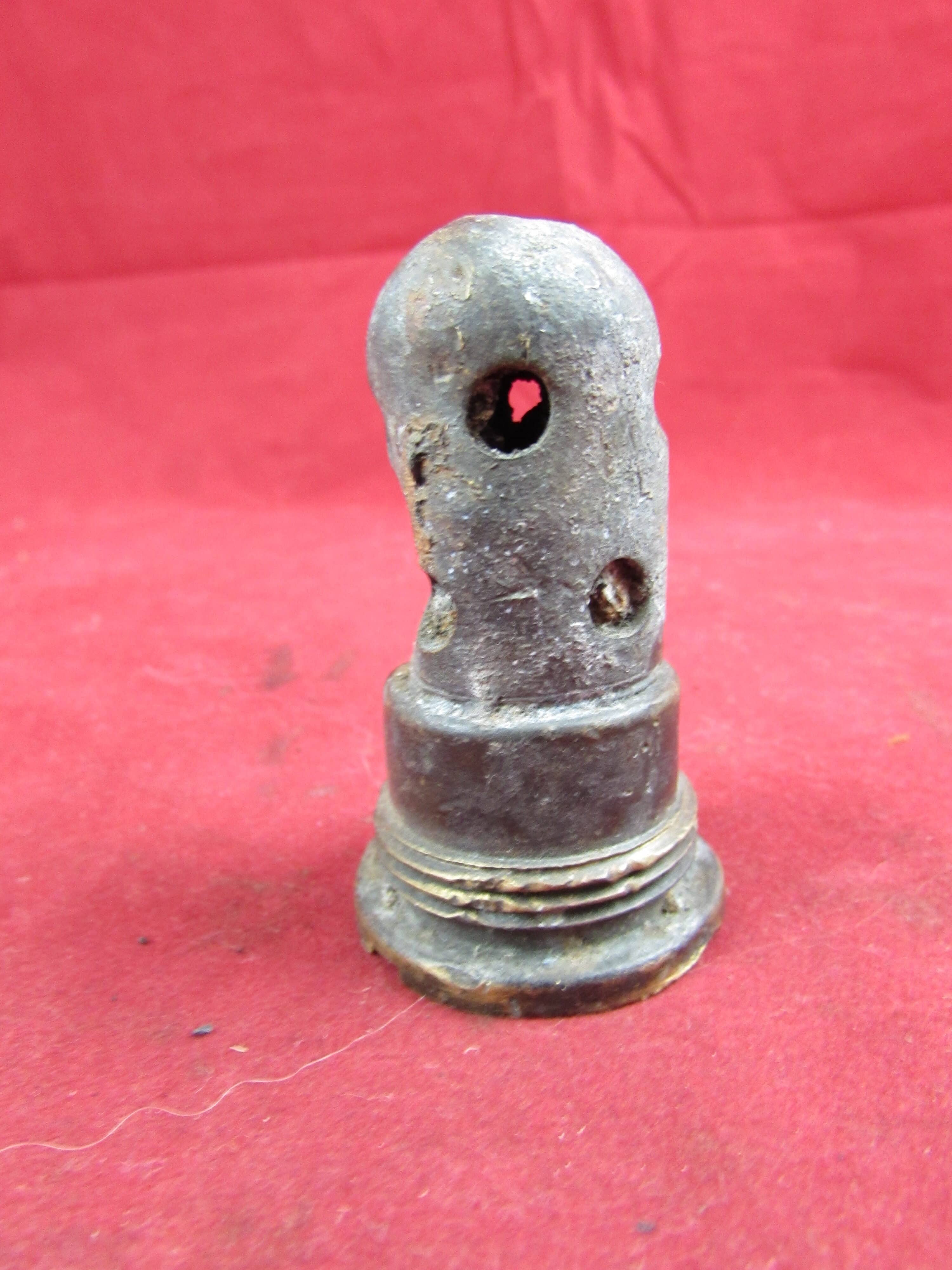
Relic from Battle of Loos. Designed by Major Battye RE, and manufactured at Bethune, 1915 ‘Towards the end of 1914, Captain B C Battye, RE (later Colonel, DSO), then serving with the Indian Corps, designed and produced for that Corps cast iron segmented hand grenades, filled at first with gun-cotton dry primers and later with ammonal. At then end of December, 1914, Captain H H Bateman, RE (later Lieut-Colonel, DSO, MC) of the 26th Field Company, acting under the orders of Brigadier-General S R Rice, then Chief Engineer of the I Corps, organized a bomb factory for the supply of the whole BEF, at 78 Rue de Lille, Bethune, where he produced, with French civilian labour as well as sappers, bombs of the Battye design filled with ammonal and fitted with Nobel lighters. For nine months, often under shell-fire, which luckily never scored a hit on the room where ammonal was being filled into the bombs, Captain Bateman with his band of workers continued to turn out bombs to an average daily output of 1,000 to 1,500. Including a special issue of 80,000 for the Battle of Loos, the total output for the factory came to about a quarter of a million. The output of the Bethune factory was the only reliable source of supply for the BEF until issues of cricket ball grenades with fuse lighters, which, however were useless in wet weather, came from England in September, 1915. The well known Mills bomb began to be supplied soon after.’ The Battye grenade, fuse segmented cast iron cylinder with simulated explosive insert; fuse inside copper tube (3.5cm of fuse left exposed) inserted into inner; painted black. An original inert World War One British Battye grenade, representing an early pattern of hand-thrown explosive device used during the formative stages of trench warfare in the Great War. The Battye grenade is among the lesser-seen British grenade designs of WWI, reflecting the rapid innovation and improvisation that characterised munitions development between 1914 and 1918. Surviving inert examples are increasingly scarce and highly desirable among specialist collectors of First World War ordnance. This piece stands as a tangible relic of the close-quarters combat that defined the Western Front. Historical Context – Early British Grenade Development At the outbreak of World War I, the British Army had limited stocks of modern hand grenades. As trench warfare developed, there was urgent demand for effective short-range explosive weapons for use in raids, defensive actions, and assaults on enemy trenches. Designs such as the Battye grenade formed part of this early wartime evolution, preceding or existing alongside more standardised patterns that later became widely issued. Grenades were essential tools in: Trench clearing operations Night raids Defensive counter-attacks Close-quarter fighting in confined spaces The Battye pattern reflects the transitional period of British grenade design before mass standardisation later in the war. Design & Construction Early WW1 British grenade pattern Compact and purpose-built for trench warfare Industrial wartime manufacture Now preserved in inert condition Increasingly scarce survivor of early Great War munitions development Its relatively uncommon status makes it particularly appealing to collectors focused on specialist or developmental ordnance. Collector & Display Value This inert WW1 British Battye grenade is ideal for: Collectors of First World War militaria Trench warfare artefact specialists British Army ordnance collectors Museum or educational displays Great War munitions historians As a display piece, it represents the intimate and brutal nature of close-quarters fighting during the conflict. Condition Inert and safe for display. Original wartime condition with age-related wear consistent with over 100 years of history. Please refer to detailed photographs for surface condition and construction features. Antiqurio Collection Note At Antiqurio, we curate authentic artefacts that illustrate the material and technological realities of historical conflict. This inert British Battye grenade offers a rare opportunity to preserve a piece of early WW1 trench warfare development — a reminder of the innovation born from necessity during the Great War.
World War 1